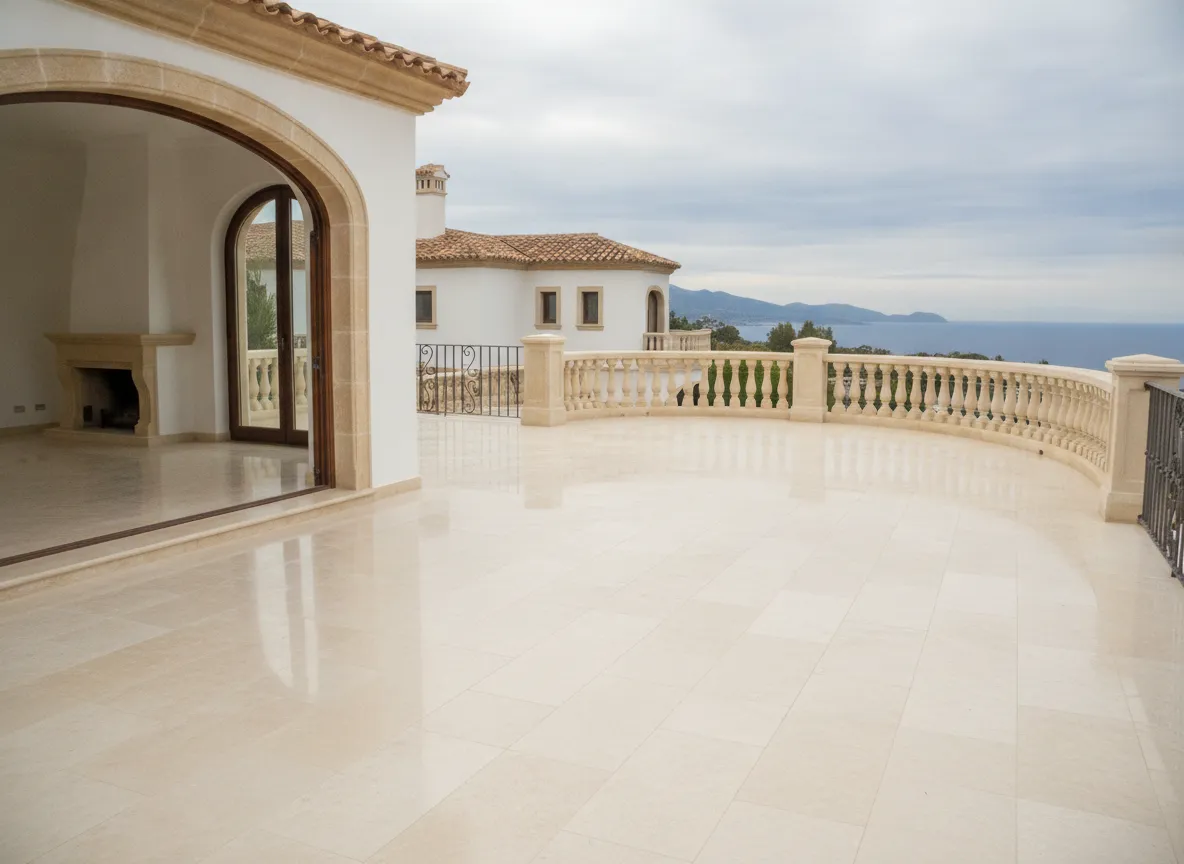
How we perform travertine restoration on site
We wash open voids clean — Strong extraction and neutral stone cleaners wash packed dirt out of every cavity. Clean stone lets repair fillers bond firmly.
We fill open floor cavities — We press the chosen filler deep into every open void until it sits level with the tile face.
Diamond abrasives hone the stone flat — Rotary floor machines with diamond pads shave away scratches and uneven tile edges across the room.
We refine the chosen stone sheen — Finer diamond pads hone the floor to your desired gloss level. The stone face ends up smooth and even underfoot.
Breathable sealer protects the stone — Penetrating sealer sinks into stone pores without leaving a film on top. Moisture can escape freely while oils and spills stay out.
Restored travertine brings enduring value to the property
Flush holes filled with matching resin
If you choose tinted resin, voids are packed to match the natural stone shade. The surface dries level with nearby floor tiles so mop water no longer pools inside pits. You can walk across without feeling hollow spots.
Smooth matte finish across the entire floor
If you choose a honed matte finish, fine diamond pads cut away scratches without creating slippery glare. Sunlight scatters softly across the floor rather than bouncing harsh reflections. Walking in bare feet feels completely smooth.
Deep seal against ground-in grime
A breathable impregnating sealer penetrates beneath the surface pores indoors and outdoors. Spills and outdoor moisture sit on top instead of soaking through the stone core. Routine sweeping and washing remove dust easily.
We cover the Costa del Sol
Restoration work covers private residences, residential communities, and commercial spaces across the entire coastal region.
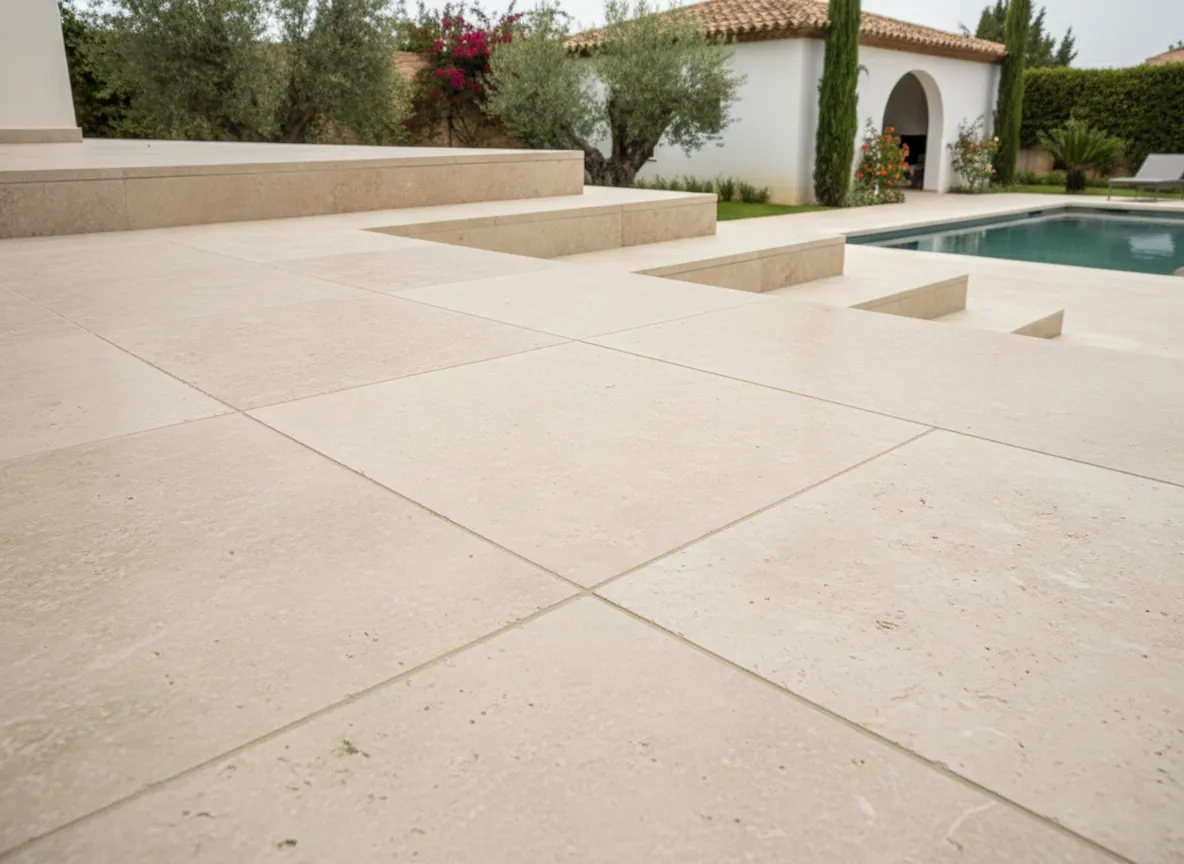
Send a message to restore your travertine floors
Response time: 24 hoursSatisfaction guarantee
Choosing between cement grout and tinted resin filling
Natural holes in travertine need stable filling to stop daily dirt from settling into the stone. Cement grout gives a classic, lightly textured seal. It blends in naturally with rustic outdoor tiles and garden terraces. The mix cures into a matte, earthy texture that lets trapped moisture dry out safely. It breathes well alongside the nearby stone slabs. It also stands up to sun and rain without peeling away from stone edges. This makes cement grout a dependable choice for open-air patio floors.
Tinted resin makes a tight, solid fill. We blend the color to match the natural shades and veins of your floor tiles. The resin hardens completely solid inside the stone voids. It grinds down flat with the tile surface during polishing. This leaves indoor floors feeling smooth and seamless underfoot. Our advice is tinted resin for living rooms and dining areas where you want floors that mop clean easily. For broad tile care, see our guide on natural stone restoration.
Choosing between a honed matte or satin finish
Travertine takes on a distinct look based on how finely we hone the stone surface. A honed matte finish leaves a smooth face without shine. This flat texture hides daily dust, shoe prints, and fine surface wear very well. Outdoor patios and pool surrounds benefit most from this low sheen. Wet stone stays safe and grippy under bare feet around water. The quiet surface also shows off the natural holes and earthy tones of the stone.
A satin semi-gloss finish adds a warm, soft glow across your floor. We polish the tiles with finer diamond pads until they catch indoor light evenly. The stone never looks like glass and avoids the harsh glare of high-gloss marble. This smooth surface makes indoor cleaning fast because mops glide without catching on edges. Our recommendation is a satin finish for indoor living rooms, while outdoor pool areas remain honed matte.
Foot traffic and water exposure determine the right sheen for each space. High moisture outside demands reliable grip, while enclosed rooms benefit from brighter reflected light.
Is this what you are looking at?
Dark grit inside living room voids
Open floor cavities collect household dust after original filler wears away. These dark voids can be repaired flush, as long as old dirt is cleaned out before filling.
Dull traffic trails across dining tiles
Windblown calima grit abrades the floor under repeated daily shoe friction. Dull traffic trails can be smoothed away, as long as diamond honing cuts past surface scratches.
Green growth along pool terrace stone
Standing pool water feeds algae growth inside porous, unsealed travertine slabs. Green stains can be removed safely, as long as deep washing clears spores before sealing.
Cloudy acid spills beside dining tables
Spilled citrus drinks react chemically with minerals across bare stone tiles. Cloudy etch marks can be erased completely, as long as diamond pads re-hone the stone face.
Cracking tile edges along terrace expansion
Trapped ground moisture expands under hot sun, loosening weak tile edges. Spreading cracks can be stopped, as long as loose pavers are re-set before grinding begins.
Your questions, answered
How can you prolong the lifespan of restored travertine? +
Neutral stone soaps and routine sweeping protect the seal from gritty calima dust. Acid cleaners strip away protective barriers quickly. That exposes open pores to water damage and dark stains.
Does travertine restoration cause disruption for neighbouring apartments? +
Our rotary machines use water misting to keep flying dust at zero while grinding. We inform community managers early and plan noisy work inside approved daytime hours on the Costa del Sol.
Are residential travertine floors insured while restoration is underway? +
Full business insurance covers our work and your property while we work in your villa. Homeowners stay protected against any sudden harm to stone floors or fittings.
What preparation is needed before restoring interior travertine floors? +
Moving loose furniture and breakable items gives our crew clear access across the floor. We tape off baseboards and nearby wood trim with plastic film before we begin washing.
Can deep rust marks be pulled out from outdoor travertine? +
Special poultice pastes draw deep rust and plant stains out of natural stone pores. The paste absorbs the dark color without harming the tile face. Once wiped away, the original stone color returns evenly.
What happens if you are unhappy with the travertine finish? +
We provide a satisfaction guarantee on every completed project. If filled holes or honed areas miss the agreed sample, we return quickly. Our crew will re-polish the stone until it meets the standard.