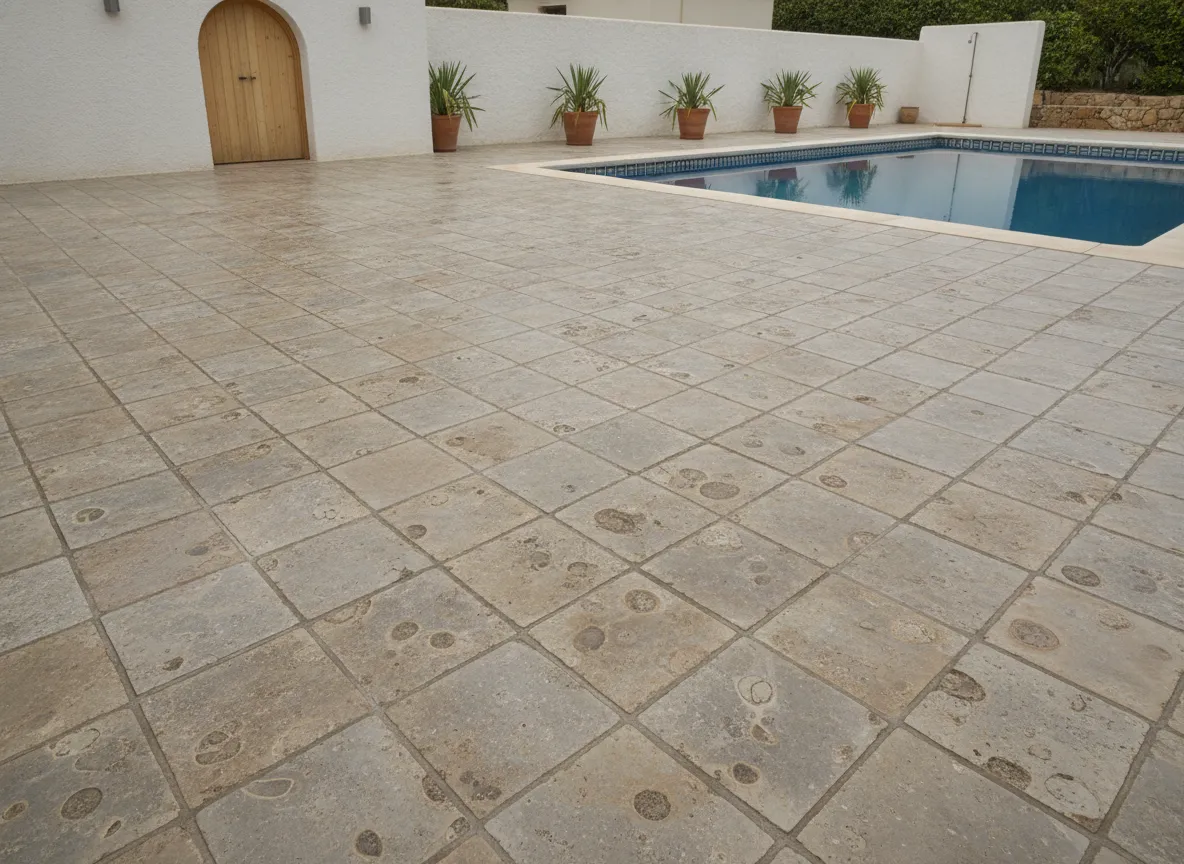
The right sequence delivers lasting stone protection
The rotary cleaner extracts grime — We clean the stone with fresh water extraction to lift deep dirt and old grime before sealing.
Moisture meters check internal damp — We check the floor with moisture meters to ensure no damp remains trapped beneath the tiles.
We mask adjacent skirting boards — Protective paper covers baseboards, wood doorframes, and metal strips against stray drips. We keep all bordering woodwork safe while we work.
The impregnator penetrates open pores — We spread the liquid sealer evenly across every square metre. The porous stone absorbs the protective liquid below the surface.
Cotton pads buff excess liquid — Rotary machines buff away leftover liquid from the surface before it can dry. The finished stone stays safe and non-slip.
Stone Sealing & Protection leaves clean repellent floors
Liquid beads stay on top
Spilled coffee, olive oil, and red wine sit on the surface instead of soaking into tiny pores. A paper towel wipes the liquid away without leaving a greasy mark. If you choose a clear sealer, the stone also keeps its original look under daily use.
Calima dust washes away
Desert dust settles over outdoor paving without sticking to open pores. A garden hose washes away red mud after rain. Limestone terraces keep a fresh finish that lets go of surface dirt fast.
Moisture leaves without trapped damp
If you choose a breathable sealer, moisture escapes easily instead of trapping white salts under the tile. Terraces dry out fast after heavy rain without dark damp patches. Shaded garden paving also stays cleaner and resists green slime.
We cover the Costa del Sol
Restoration and protective sealing treat natural stone floors across residential properties throughout the coastal region.
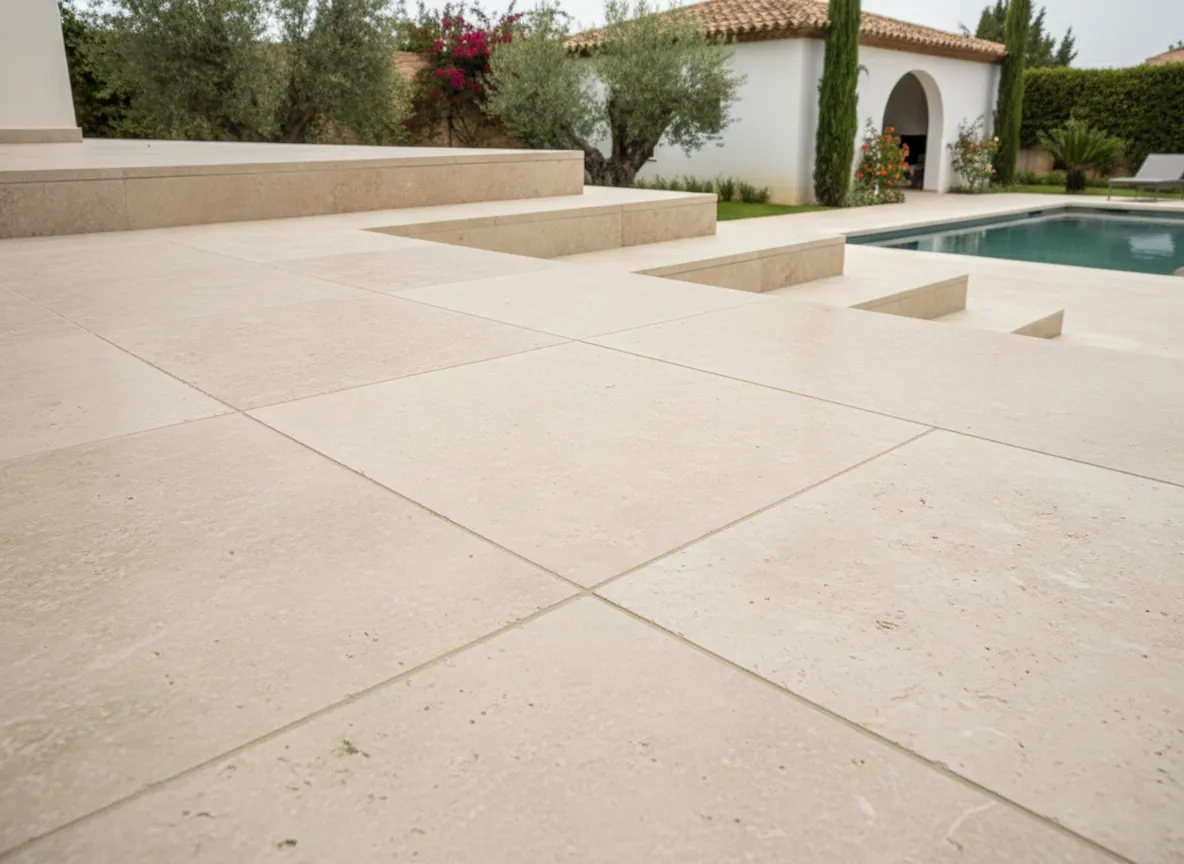
Clear natural impregnator or colour enhancing sealer
A clear natural impregnator sinks deep into the stone without changing how the floor looks. Pale limestone and cream marble keep their exact original shade and soft sheen. Spills sit on top of the tiles while the stone looks bare to the eye. This option suits homeowners who want full protection while keeping the natural look of the original quarry stone.
A colour enhancing sealer darkens the stone and brings out hidden veins and warm tones. It creates a rich wet look on dark slate or pale travertine. Grey, gold, and charcoal shades stand out with much deeper contrast across shaded patios. Sun and weather can wash out stone tones over time, and an enhancer brings those deep colours back.
The choice comes down to how you want the finished floor to look. If you prefer the clean look of raw stone, a clear sealer is the right fit. Our advice is to use an enhancer when outdoor tiles look washed out from the sun. This option gives long-lasting contrast if you prefer a richer shade.
Breathable penetrating sealer or topical coating
A breathable penetrating sealer lines the inside of open stone pores without making a film on top. Ground moisture moves up through the floor as light vapour, so damp never gets trapped beneath the tiles. Terraces and ground floor rooms stay sound and dry because wet ground can breathe naturally. The stone keeps its real texture underfoot and will not peel or flake over time.
A topical coating creates a shiny plastic layer across the face of the stone. Near the coast, rising damp gets trapped under this sealed plastic film. Within weeks, the trapped water causes white blisters and milky patches that ruin the look of the floor. For floors with old coatings, a full restoration strips away peeling plastic before breathable protection can go on.
The key difference is how the floor handles moisture from the ground. Topical coatings block airflow, while breathable sealers let damp escape freely into the air. Our advice is always a breathable sealer for stone on concrete slabs or outdoor patios.
Does your stone floor need new seal protection?
Response time: 24 hoursSatisfaction guarantee
Is this what you are looking at?
Dark oil stains beside kitchen stoves
Cooking grease has soaked past untreated tile faces into the absorbent limestone matrix. The oil mark can be drawn out before protective sealing secures the porous stone.
Orange mud clinging to terrace gaps
Saharan dust storms deposited fine red silt into unsealed outdoor paving cavities. The stained paving can be saved, as long as deep dirt is washed out before new sealer goes on.
Chalky white haze on pool surrounds
Ground damp rose through open stone pores and dried into white salt crusts on top. The salt crust can be cleared, as long as breathable sealers let rising moisture escape freely.
Persistent damp patches on hallway marble
Mop water soaks into porous floor areas that lost their original protective finish. These dark patches can be fixed, as long as the tiles dry out fully before new protection is applied.
Rough pitted spots across outdoor pavers
Salty sea air broke down bare mineral binders across exposed outdoor paving tiles. The crumbly surface can be saved, as long as deep sealers strengthen the weak stone pores from within.
Your questions, answered
Can rooms be used while stone sealing takes place? +
Treated rooms stay closed while the protective liquid soaks deep into open stone pores. We open the floor for light walking once the surface feels dry to the touch. Heavy furniture should stay off the tiles until the protection sets fully.
Who carries out the floor protection work? +
We handle the whole job ourselves from the first clean to the final coat of sealer. Our team completes every step in your home from start to finish. We never pass work to outside trades.
Does stone sealing make outdoor patio tiles slippery? +
Penetrating sealers soak completely into the stone pores without leaving a surface coating. The natural grip and rough texture of the tile stay the same underfoot. Rainwater drains away while the surface keeps its safe grip.
Does stone protection also seal the grout lines between tiles? +
We apply the sealer across the entire floor, so grout lines absorb protection alongside the stone. Sealing prevents dark mold and dirty mop water from staining cement joints. The grout stays clean and matches the refreshed tiles.
How do harsh household cleaners affect stone protection? +
Acidic cleaners and bleach break down the protective barrier and leave the stone open to stains. We recommend gentle neutral soap to keep the seal strong. Warm water and a damp mop are often enough for regular cleaning.
What happens if spills still absorb after sealing? +
We stand behind our work through a comprehensive satisfaction guarantee. If liquid fails to bead on treated stone, our team returns to inspect the tile porosity. We reapply the protective impregnator to resolve absorbency issues.